



Some Measures for Reducing Noise in Ultrasonic Cleaning Machines
Publish:2023-08-16 09:49:32The higher the ultrasound frequency, the less harmonic waves will enter the human ear, and the corresponding noise will be reduced. However, as the ultrasound frequency increases, the cavitation process becomes difficult to occur. When the frequency increases, the expansion time of the sound wave becomes shorter, and the cavitation nucleus does not have time to grow to a cavitation bubble that can produce a certain cavitation effect. Even if the cavitation bubble forms and the compression time of the sound wave is short, the cavitation bubble may not have time to collapse. Therefore, an increase in frequency will weaken the cavitation effect. In order to generate cavitation at higher ultrasonic frequencies, the sound intensity can be increased, that is, the sound intensity threshold of ultrasonic cavitation (the lowest sound intensity or sound pressure amplitude that causes cavitation in the liquid) will increase with the increase of frequency. However, the energy consumption of high-frequency ultrasound in liquids is fast, which requires us to increase power, resulting in a decrease in economic efficiency. Therefore, in order to achieve the same chemical effect, high frequency ultrasound requires significant energy consumption.
The working frequency of ultrasonic cleaning is around 1MHz or even up to 3MHz, sometimes referred to as megahertz level ultrasonic cleaning. Due to the high frequency, it is difficult for sound waves to undergo cavitation in the cleaning solution. The cleaning mechanism is generally believed to be mainly due to the sound pressure gradient and particle cleaning of parts with small gaps, narrow slots, and deep holes, while the cavitation effect is secondary. The characteristic of this type of ultrasonic cleaning is its strong directionality, and the surface of the part is generally placed in a direction parallel to the sound beam during cleaning. So the problem of noise no longer exists. But without cavitation reaction, its washing ability needs to be tested to prove. However, the decrease in washing capacity can be solved by some auxiliary measures such as electrolytic water washing, ozone washing, physical washing, etc. This is a direction that can be further studied.
3. Install sound-absorbing accessories and seal the washing bucket or cylinder
Install sound-absorbing accessories such as glass wool at the bottom, end face, and surrounding areas of the washing container. This measure is necessary, although it may absorb some ultrasound and affect efficiency, in order to protect the environment and human health, this loss is acceptable.Seal the washing container to reduce the spread of noise. The effect of this measure is good, but some washing containers are not well sealed or difficult to achieve, such as wave wheel washing machines. If it is not easy to seal, a sound insulation cover can be added outside the entire cleaning machine. The inner wall of the washing container is made of materials with strong sound reflection ability, which can weaken the sound after multiple bounces and also reduce the escape of noise.
4. Reduce sound intensity
The size of noise is proportional to the sound intensity, and reducing the sound intensity will inevitably achieve the goal of noise reduction. However, the sound intensity cannot be infinitely small, as it has a threshold (i.e. the minimum value at which cavitation occurs). If the sound intensity is less than the threshold, cavitation effect cannot occur. Moreover, the sound intensity is directly proportional to the intensity of cavitation within a certain range. If the sound intensity is low and the cavitation is mild, the washing efficiency of ultrasound is poor, the washing time is long, and energy is wasted. So we need to choose the optimal sound intensity value based on the different washing objects.
5. Reduce external pressure
Reducing external pressure reduces the sound intensity threshold required for cavitation collapse, achieving the goal of reducing noise. But first of all, the severity of cavitation bubble collapse has decreased-
- Factors affecting the price of sewage treatment equipment
2023-08-16
-

- What are the precautions for ultrasonic cleaning
2023-08-16
-

- Application of Ultrasonic Cleaning Technology
2023-08-16
-

- What are the advantages of industrial ultrasonic cleaning machines?
2023-08-16
-
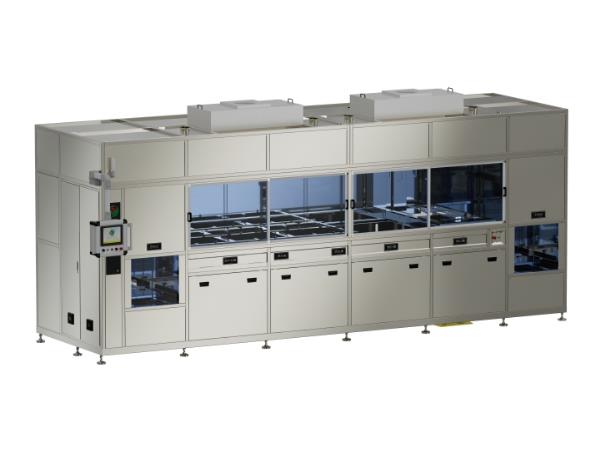
- Fully automatic ultrasonic cleaning machine cleaning machine
- Specification and model:QST-5042AD
-
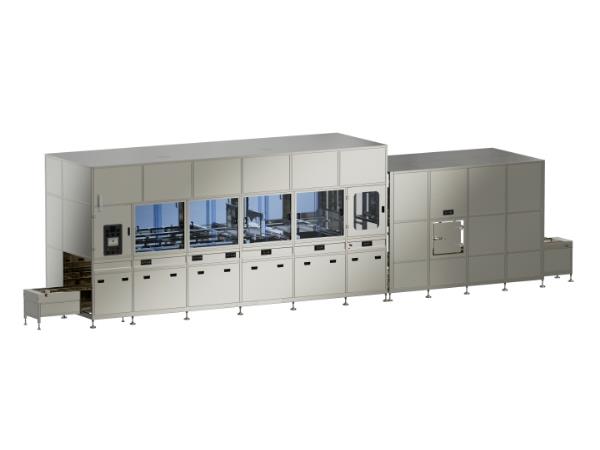
- Fully automatic ultrasonic cleaning machine
- Specification and model:QST-70126AD
-
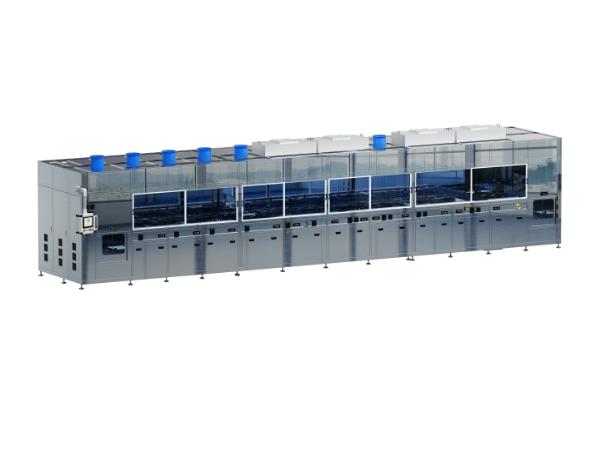
- Optical industry electroplating ultrasonic cleaning machine
- Specification and model: QST-111060AD
-
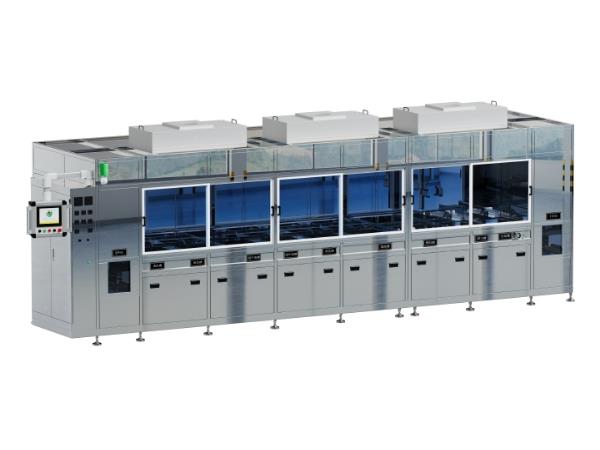
- Fully automatic ultrasonic cleaning machine
- Specification and model:QST-90112AD


